“Local SEO isn’t about being the best business in the world; it’s about being the best business in your neighborhood.”
— Brian Dean, Founder of Backlinko
Introduction: Why Your Small Business Can’t Afford to Ignore Local SEO
If you’re a small business owner trying to get more customers through your door or more calls to your phone, there’s one digital marketing strategy you can’t afford to ignore—local SEO. Unlike broad SEO tactics that focus on national or global rankings, local SEO is all about helping people find your business right in their own neighborhood, city, or town.
Around 46% of Google searches seek local information. If your small business isn’t optimizing for local SEO, you’re handing nearby customers to competitors. Local SEO isn’t just a buzzword—it’s the key to appearing in front of customers typing phrases like “coffee shop near me”, “best plumber in [your city]”, or “local bakery open now.” Whether you run a cozy bakery, a boutique gym, or a plumbing service, this guide will show you how to turn local searches into loyal patrons.
Why Local SEO Matters for Small Businesses?
Local SEO levels the playing field. While big brands dominate national searches, small businesses can thrive by targeting hyper-local audiences. Here’s why it’s non-negotiable:
- “Near me” searches have grown 150%+ in recent years.
- 88% of consumers trust online reviews as much as personal recommendations.
- Local SEO drives foot traffic: 78% of mobile “near me” searches result in an in-store visit.
By focusing on local SEO, you’re not just attracting clicks, rather you’re building relationships with your community.
Foundational Local SEO Strategies
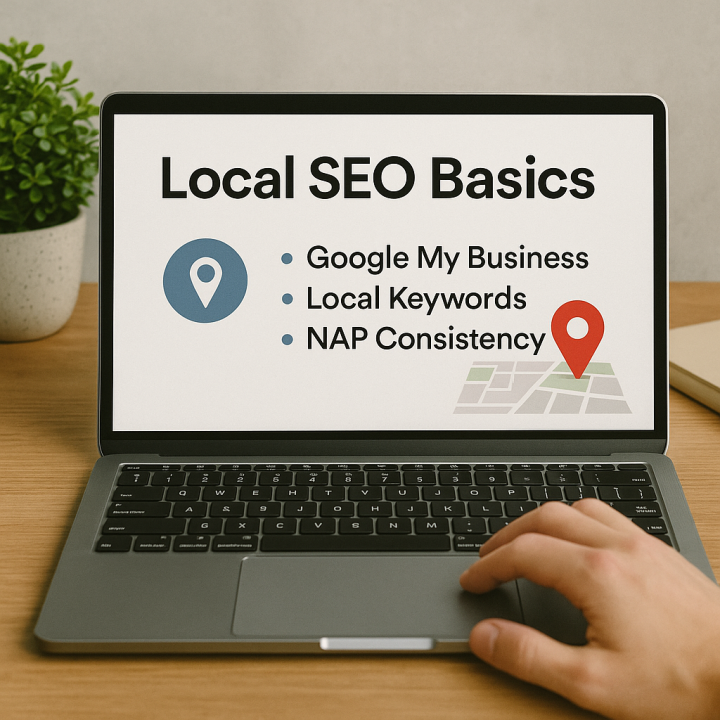
1. Claim & Optimize Your Google Business Profile
Your Google Business Profile (GBP) is your digital storefront. Here’s how to optimize it:
- Complete every field: Add high-quality photos, accurate hours, services, and categories (e.g., “Family-Owned Coffee Shop in Austin”).
- Encourage reviews: Politely ask customers to leave feedback. Respond to all reviews (yes, even negative ones) to show you care.
- Post updates: Share promotions, events, or seasonal offers directly on your GBP.
2. Target “Near Me” Keywords
Optimize for local search intent by:
- Using location-based keywords: “Florist in Denver,” “Emergency Plumber Near Me.”
- Adding keywords naturally: Include your city/neighborhood in title tags, meta descriptions, and headers.
- Creating local content: Write blog posts like “Top 5 Wedding Venues in Miami” or “Best Vegan Cafés in Portland.”
3. NAP Consistency: The Backbone of Local SEO
Ensure your Name, Address, and Phone Number (NAP) are identical everywhere:
- Directories (Yelp, Yellow Pages).
- Social media (Facebook, Instagram).
- Your website’s footer or contact page.
Inconsistent NAP confuses Google and customers. Use tools like BrightLocal to audit listings.
Advanced Local SEO Tactics to Outrank Competitors
1. Leverage Local Schema Markup
Schema markup is code that tells Google exactly what your business offers. Add local business schema to your website to highlight:
- Opening hours.
- Customer reviews.
- Service areas.
This boosts visibility in local pack rankings (the map results above organic listings).
2. Build Local Citations & Backlinks
- Partner with local influencers: Collaborate with bloggers or Instagrammers in your area.
- Sponsor community events: Get mentioned on event websites or local news.
- Join your Chamber of Commerce: Their member directory often links to your site.
3. Optimize for Voice Search
Voice search queries are conversational. Target phrases like:
- “Where’s the closest pizza place open now?”
- “Best hair salon near me for curly hair.”
Use long-tail keywords and answer questions in your FAQ page or blog posts.
4. Create Hyper-Local Content
Become a community authority by writing about:
- Local events (“2024 Austin Food Festival Guide”).
- Neighborhood spotlights (“Why Downtown Nashville Loves Our Bookstore”).
- “Meet the Owner” stories to humanize your brand.
Avoid These Common Local SEO Mistakes
- Ignoring mobile optimization: 60% of local searches happen on mobile. Ensure your site loads quickly and is mobile-friendly.
- Duplicate listings: Use Google’s Duplicate Location Manager to merge or remove duplicates.
- Forgetting to track progress: Regularly check GBP insights and ranking tools.
Tools to Measure Local SEO Success
- Google Analytics: Track traffic from local keywords.
- Google Search Console: Monitor site performance in local search.
- BrightLocal: Audit citations, track rankings, and spy on competitors.
Case Study: How “Brew & Bean Café” Boosted Foot Traffic by 70%
This family-owned café in Seattle:
- Optimized their GBP with photos of their latte art and updated hours.
- Ran a “Review Us & Get a Free Cookie” campaign, earning 45+ 5-star reviews.
- Published blogs like “Seattle’s Coziest Study Spots” (featuring their café).
Result? They jumped to #1 in “coffee shops near me” searches within 3 months.
Conclusion: Start Dominating Local SEO Today
Local SEO isn’t a one-time task—it’s an ongoing strategy to stay ahead. Begin with the basics: claim your GBP, fix NAP errors, and create local content. Then, level up with schema markup and voice search. Remember, every small step adds up to big visibility.
Related Reading: The Ultimate Guide to Technical SEO for Small Businesses
Related Reading: Common SEO Mistakes and Simple Fixes for Small Businesses
Related Reading: The Ultimate Guide to Technical SEO for Small Businesses
Related Reading: Common SEO Mistakes and Simple Fixes for Small Businesses