
In the rapidly evolving digital landscape of 2026, visibility is the only currency that truly matters for entrepreneurs. At Meet Thy Need, we believe that every small business deserves to be found by the people who need them most. However, many brilliant founders fall into the “Digital Silence”—having a world-class product but no way for customers to find the “front door.”

To break that silence, you must master a dual-force approach: Keyword Research & Content Strategy for Small Business. This isn’t just about picking words from a list; it is about building a strategic bridge between a customer’s urgent problem and your professional solution.
Table of Contents
Why Keyword Research & Content Strategy for Small Business is Your Growth Engine
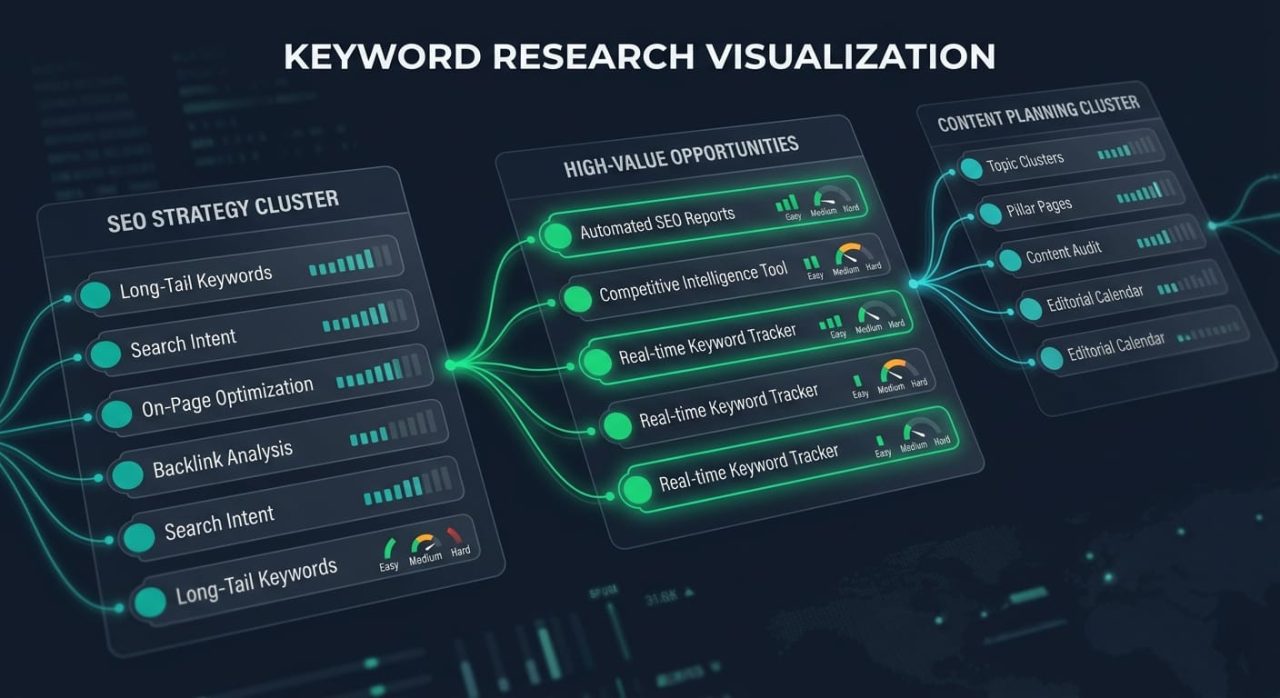
Many new bloggers make the mistake of writing about what they want to talk about, rather than what their customers are searching for. A robust Keyword Research & Content Strategy for Small Business flips the script. It allows you to peer into the minds of your audience and understand their intent before you ever hit “Publish.”
The Power of Topical Authority
In 2026, search engines like Google have moved beyond simple keyword matching. They now look for “Topical Authority.” By executing a comprehensive Keyword Research & Content Strategy for Small Business, you signal to search algorithms that your website is a trusted encyclopedia of knowledge, not just a collection of random posts. This authority is what allows a small business to outrank a massive corporation.
Decoding Search Intent: The Foundation of Strategy
The most critical part of any Keyword Research & Content Strategy for Small Business is understanding the “Why” behind the search. Google prioritizes “Search Intent” above all else.
- Informational Intent: The user wants to learn (e.g., “How does SEO work for small business?”).
- Commercial Intent: The user is comparing (e.g., “Best SEO tools 2026”).
- Transactional Intent: The user is ready to buy (e.g., “Hire SEO strategist”).
A successful Keyword Research & Content Strategy for Small Business ensures that you have content for every stage of this journey. If you only focus on “buying” keywords, you miss the chance to build trust with people who are still learning.
The Hybrid Discovery Workflow: Free Tools Meets AI
You do not need a massive budget to excel at Keyword Research & Content Strategy for Small Business. In fact, some of the best data is completely free.
High-Impact Free Tools
To jumpstart your Keyword Research & Content Strategy for Small Business, utilize these three essentials:
- Google Search Console: This tells you exactly what people are typing to find your site right now. It is the “source of truth.”
- Google Autocomplete: Start typing your niche into the search bar. The suggestions Google provides are real-time trending topics.
- AnswerThePublic: This tool visualizes the questions (Who, What, Where, Why) that people are asking about your industry.
The AI Edge in 2026
Modern Keyword Research & Content Strategy for Small Business now incorporates AI as a brainstorming partner. Use AI to find “Content Gaps.” For example, ask: “What are the top 10 frustrations of a small business owner when they first start a blog?” These frustrations are your high-converting long-tail keywords.
The Small Business Superpower: Long-Tail Keyword Strategy
While big brands fight over broad terms like “Marketing,” your Keyword Research & Content Strategy for Small Business should focus on the “Long-Tail.” These are specific phrases like “affordable local SEO services for plumbers” or “how to write a content strategy for a new bakery.”
Long-tail keywords have lower search volume, but the people searching for them are highly qualified. They know exactly what they want, and they are much more likely to convert into paying customers.
Architecture: Topic Clusters and Keyword Mapping
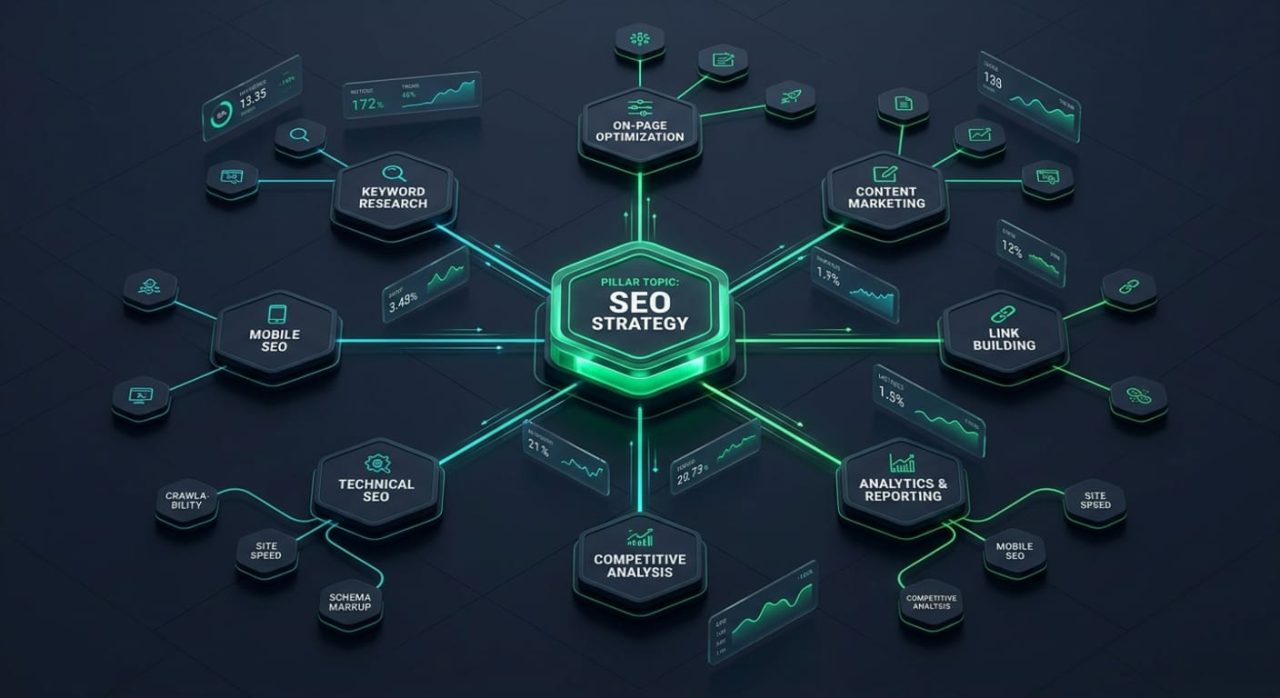
A disorganized blog is a confusing blog. A professional Keyword Research & Content Strategy for Small Business relies on the “Hub and Spoke” model.
The Topic Cluster Model
Think of this article as your Pillar (The Hub). Every other article you write about specific SEO tools or writing tips acts as a Cluster (The Spoke). By linking all your spokes back to your pillar, you create a “web of authority” that RankMath and Google love.
Essential Keyword Mapping
In your Keyword Research & Content Strategy for Small Business, every page must have a “Target.” You should never have two pages targeting the exact same keyword. This is called “Keyword Cannibalization,” and it tells Google that you are competing with yourself. Use a simple spreadsheet to map one primary keyword to one specific URL.
SEO Content Writing: Crafting for Humans and Bots
Once the Keyword Research & Content Strategy for Small Business is planned, it is time to write. To satisfy RankMath’s requirements and keep your readers engaged, follow these “Human-First” rules:
- Front-Load Your Keyword: Ensure “Keyword Research & Content Strategy for Small Business” appears in your first 100 words.
- Optimize Headers: Use your primary and secondary keywords in H2 and H3 tags every 300 words.
- Dwell Time Matters: Use bullet points, short paragraphs, and bold text to keep users reading. The longer they stay, the higher you rank.
- Humanize AI Drafts: If you use AI to help write your Keyword Research & Content Strategy for Small Business articles, always add a personal story or a specific case study to meet Google’s EEAT requirements.
The 90-Day Execution Roadmap
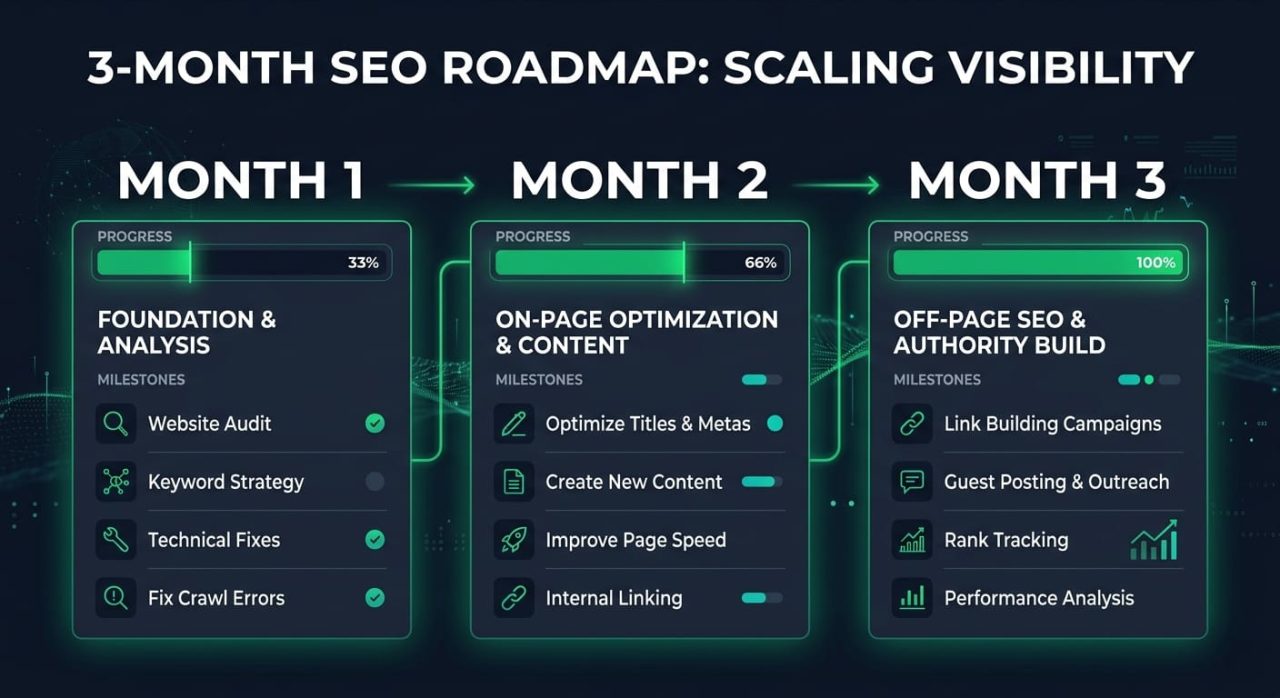
A Keyword Research & Content Strategy for Small Business is useless without execution. Here is your 3-month plan:
- Month 1: Identify your 4 main Pillars. Focus on high-level, evergreen guides.
- Month 2: Create 12 Cluster articles (3 per week). These should deep-dive into the specific sub-topics mentioned in your Pillars.
- Month 3: Analyze your results. Use Google Search Console to see which keywords are gaining traction and update those posts with fresh information.
Conclusion: Claiming Your Authority
Building a successful Keyword Research & Content Strategy for Small Business is a journey, not a sprint. By focusing on user intent, leveraging free tools, and organizing your content into clear clusters, you aren’t just “doing SEO”—you are building a brand that people trust.
At Meet Thy Need, we are here to help you turn that digital silence into a thriving community. Pick your first three keywords today and start your journey toward topical authority.
What is the most common mistake in keyword research?
The biggest mistake is ignoring Search Intent. If you target a “buying” keyword with a “learning” article, users will leave your site immediately, hurting your rankings.
Do I need expensive tools to start a content strategy?
No. A powerful Keyword Research & Content Strategy for Small Business can be built using free tools like Google Search Console, Google Trends, and AnswerThePublic.